

As part of the GRITH project, the consortium is investigating the generation and trading of renewable power on industrial sites. This turns out to be an extremely complex challenge, involving groundbreaking work in facing, for example, grid congestion and the development of a suitable legal framework. Could an Energy Community form the best basis? On 13th November, the partners got to listen and learn from other experts in the field during an online workshop on the subject.
To get the ball rolling, the Municipality of Emmen introduced their situation at Bargermeer III. At this industrial site - housing some 160 companies - about 30% of the buildings have solar panels. While there is much more potential, the grid capacity is lacking. ‘Ondernemend Emmen’, the local business association, is calling for an onsite exchange of solar power. The physical aspects of power management are already in place and now it’s time to develop a suitable platform to organize the trading of generated power, build a pricing mechanism and find the right legal framework. The question is how?
Climate Partnership in Vejle
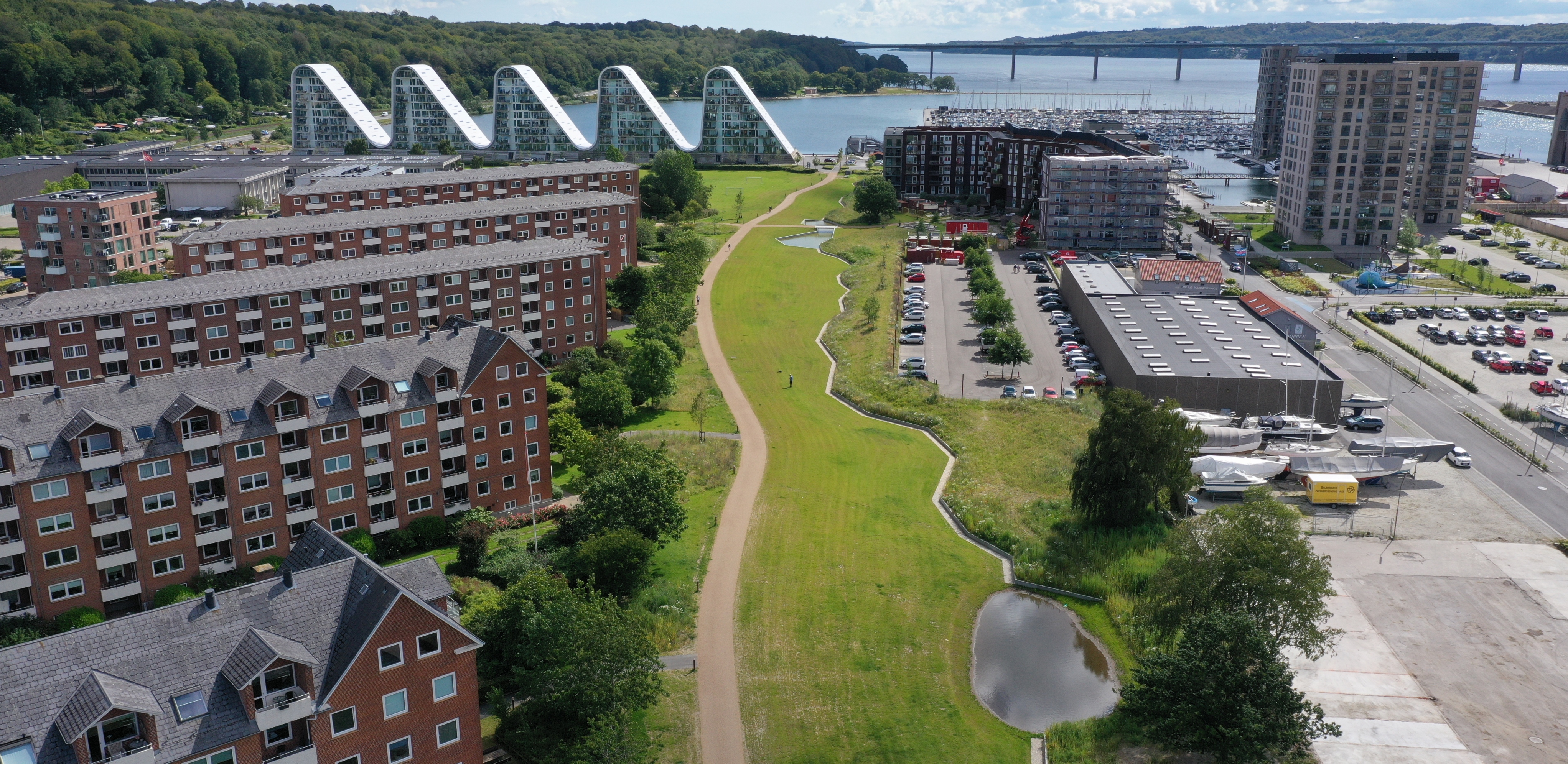
Pooling the available knowledge, GRITH partners from Vejle invited Danish regional expert Ivan Kristian Pederson to share his experience developing a climate partnership (which can be considered comparable to an energy community). The Climate Partnership Vejle North is a strategic collaboration between the Municipality and businesses in the area designed to facilitate constructive dialogue amongst businesses, attract new interested parties and expand the partnership network by supporting and disseminating learnings and experience.
A number of project ideas, currently being matured, passed the revue as Ivan explained to the GRITH audience: “It takes strong commitment, patience and continuous funding to build such a climate partnership from scratch. We need to achieve tangible results and find fitting solutions to improve district heating, flexible industrial electricity consumption, green mobility and the local generation of renewable energy - both electricity and heat.”
It takes strong commitment, patience and continuous funding to build such a climate partnership from scratch.
Barriers & drivers
We noted some barriers …
- Awareness – focus needs to shift from individual challenges to finding joint solutions.
- Relevance – central vs local organization, landlord vs tenant.
- Data – limited access to relevant data (if existing).
- Mandate – subsidiaries and mandate for investment decisions.
- Resources – lack of capacity and competences for focus on sustainability.
…and important drivers
- Commitment - Strong, ongoing support from Municipality, prominent role models, dedicated resources.
- Financing model - Lean governance funded by principal partners, project execution by interested parties.
- Phased approach - Always adjust partnership model to business relevance.
- External drivers - The energy crisis and security of supply, the ESG agenda, the EU Taxonomy.
“Smart grids and creating this climate partnership has been 10 years in the making…it’s a long haul,” Ivan added. “The Municipality makes the boundary conditions, and we must steer in the right direction.“
Symbiosis & energy network
Another example of an energy community was shared by Jens Jorn Josefson (Vejle Municipality) who highlighted the Give North project. Give is a rural town located in Vejle municipality, with district heating based on a mix of wind, solar and biogas. The Give North project is about the energy exchange between an energy park on farmland close to an industrial site with approx. 100 companies.
By connecting various stakeholders (farmer and industrial site companies) via the Municipality, an interdependence was created resulting in a combination of wind, solar and biogas prepared to Power to X – using surplus renewable energy under an new energy company SEG – the Symbiosis and Energy Network Give. Currently the on-site businesses and citizens are being invited to invest in in this energy company.
Inspiring speakers
Further inspiration came from our Belgian partners who had invited two guest speakers with intensive experience in creating an energy community concept.
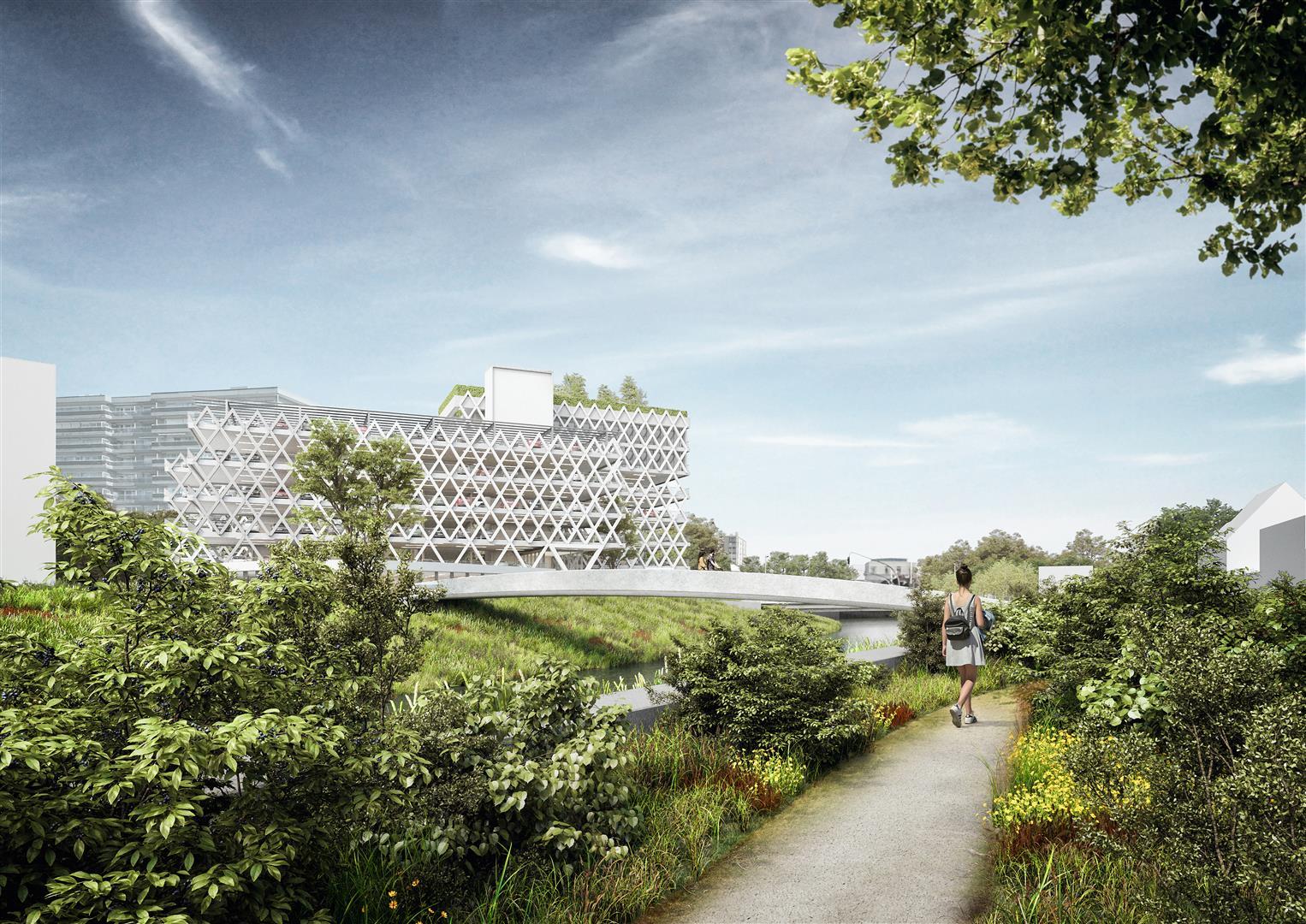
First up was Bart de Bruyne, who sketched a general picture of Energy Communities in Mechelen in various forms, thereby sharing an example of the EU (Life) project TANDEMS. This is a collaboration between governing authorities and local energy cooperatives to accelerate the energy transition by, among other things, stimulating the decentralized production of renewable energy. Other power generating and smart energy-management initiatives presented by Bart included: PV in apartment buildings, sharing between different city heritage buildings, social housing organizations, industrial parks, and building complexes (e.g. tiered parking lot Keerdonk ).
Smart, futureproof business areas
Last but not least, Mia Van Daele presented the Smart Business Area of the Future and her very relevant experience as project manager for BECOME, an innovative pilot project (2020-2023) on the industrial site Mechelen Noord. This is a collaboration between a real estate company, building manager, industrial partner, energy expert Engie and businesses on the site with a shared view to optimizing the production of green energy, testing new technologies and management systems, and expanding the e-charging infrastructure.
Mia described the various stages of establishing a decentralized energy community: “We started with the analysis of energy flows, needs and potential, followed by the installation of assets and the optimization of management software. Then, we invited on-site companies to join the community.” The last stage of this pilot involves optimizing energy flows within Mechelen Noord and integrating green mobility into the concept.
Some takeaways
There are a number of possibilities to set up an energy community on industrial sites, but these must be in compliance with a legislative framework and with (municipal) approval. Close collaboration with governing authorities is essential - it takes time.
Both Mechelen and Vejle started developments with an asset-based approach, focusing on the needs and desires of the companies. Besides an optimized energy management system, multipliers are also required. Green mobility should definitely be included in the mix now that distribution companies are moving towards electric mobility as part of the system.
Next steps
Closing the online session, GRITH coordinator Hein Braaksma concluded: “While creating a solid foundation for an energy community on industrial sites remains a struggle, enhancing interest and stakeholder participation with new and more attractive business models for renewable energy is a good beginning. It will be interesting to investigate a number of aspects further, such as the legislative framework, asset-based approach and green mobility.”